
Wood Destroying Insect Report (WDIR) in Louisiana
A Louisiana WDIR documents an inspection for wood-destroying insects for a sale or refinance. It records visible evidence in accessible areas on the inspection date; it is not a guarantee that hidden or inaccessible areas are pest-free.
When you may need one
Louisiana’s rule limits the WDIR to inspections determining the presence of wood-destroying insects for acts of sale or refinance. A lender, buyer, seller, or real-estate professional may request one as part of the transaction, but that is not the same as a universal legal requirement for every sale.
For suspected activity outside a sale or refinance, ask for the appropriate termite inspection instead. A WDIR is not renewable and is not a general-purpose annual inspection report.
What the report covers—and what it does not
Included in the inspection record
- Readily accessible, unobstructed areas.
- Visible evidence such as live or dead insects, insect parts, shelter tubes, frass, exit holes, or visible damage.
- Construction type, identified structures, findings, and obstructed or inaccessible areas.
Not a promise about everything
- Areas concealed by walls, ceilings, floor coverings, furniture, or stored items.
- Inaccessible crawl spaces or attics without the required access.
- A structural repair assessment or a guarantee against all future infestation.
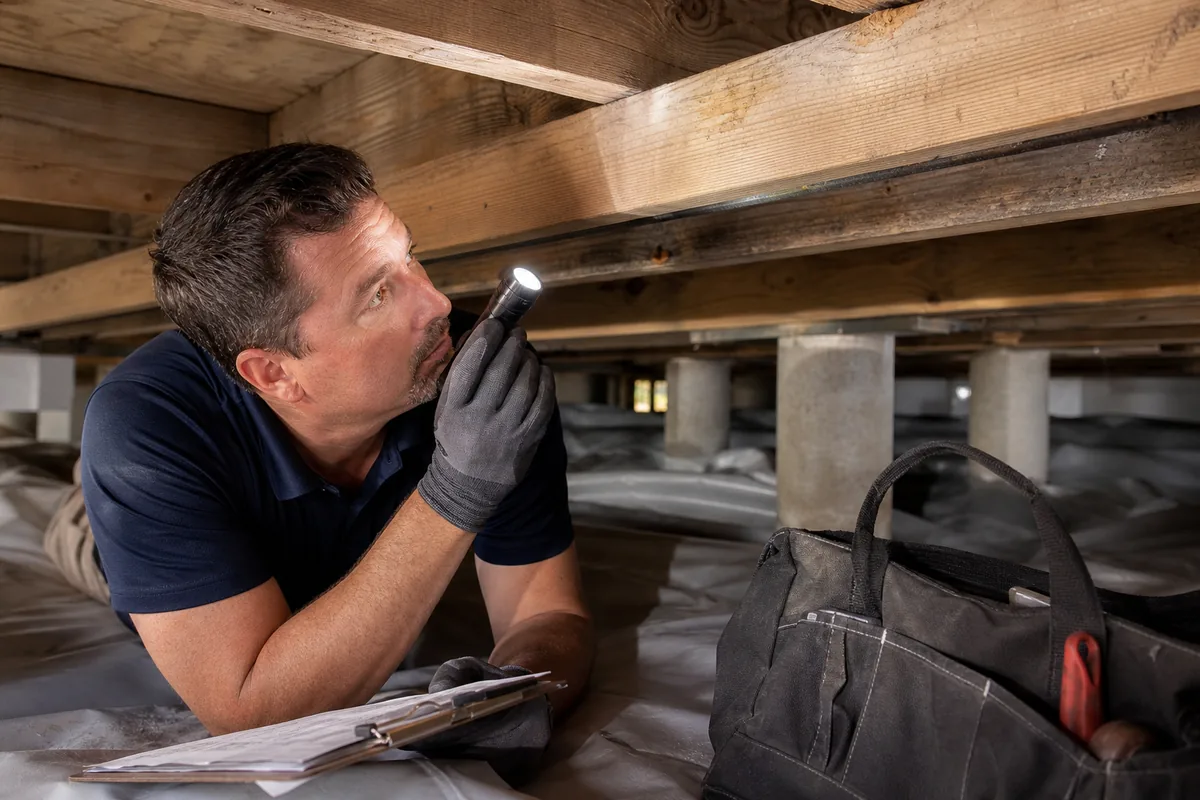
The rule describes accessible areas to inspect, including accessible bath traps, crawl spaces of raised-pier construction, and attics with permanent access. Review the report’s specific “obstructed or inaccessible” answer rather than assuming every space was seen.
The official form and who completes it
The current rule identifies commission-approved LPCA-143 and LPCA-143A forms. A person licensed in termite control or a certified WDIR technician working under the required supervision conducts the inspection. The report includes the inspection company, inspector identification, property and structures, inspection date, evidence, damage, access limits, and signatures.
A narrow 90-day treatment provision exists. The rule says the report carries a guarantee to treat without charge if live subterranean termites covered by the report are found in a readily accessible area within 90 days. It also prohibits representing the WDIR as a damage-repair guarantee. Read the actual form and rule; do not turn this into “90 days of complete termite coverage.”
Published cost observation
This is one provider’s published price, observed Nov 12, 2026. It is not an average or a quote for your property.
| Provider | Published price | Conditions | Observed |
|---|---|---|---|
| Arrow Termite & Pest Control | $74–$150 / inspection | Louisiana and the published 25-mile service radius, including Covington and Slidell. Home only; online purchase excludes additional structures. Structure type and square footage affect price. Requests within 24 hours require calling the office. | Nov 12, 2026 |
Check Arrow’s current product terms before ordering. Prices can change after the observation date.
Why a reporting fee is not the consumer price
LDAF requires companies to report termite contracts and WDIRs and publishes administrative reporting fees. That company-to-state reporting charge is separate from the price a consumer pays for the inspection, travel, property characteristics, additional structures, or urgency. Do not compare a $14 reporting line item with Arrow’s $74–$150 inspection product as if they were the same service.
Home buyer checklist
0 of 7Mark items locally as you work. Your selections are not sent anywhere.
Seller and real-estate agent checklist
0 of 6Mark items locally as you work. Your selections are not sent anywhere.
If activity or damage is found
Read the insect, location, evidence, and access notes. Ask for a written treatment scope and a separate explanation of any repair needs. A WDIR identifies reportable evidence; it does not itself perform treatment, repair damage, or replace evaluation by a qualified construction professional when structural damage is a concern.
WDIR vs termite contract
| WDIR | Termite contract |
|---|---|
| Inspection document for a sale or refinance. | Written agreement for termite-control work. |
| Records findings and access limits on an inspection date. | Defines treatment, covered structures, inspections, and contract terms. |
| Not renewable. | May have its own duration, renewal, and transfer provisions. |
Read the termite-contract guide or prepare a transfer during a home sale.
Compare WDIR providers
Arrow and Blue Star publish WDIR terms and prices. Arrow lists a $74–$150 range with a published service radius including Covington; Blue Star lists $175 for a monolithic slab and $250 for the other specified foundation types. These are separate provider observations, not an average.
Both branches had active business permits in the November 16, 2026 Business App check, expiring June 30, 2027. Recheck current authorization and confirm inspector qualifications, availability, property eligibility, and final written price before ordering.
See the direct-contact comparison
The service page puts both published prices, foundation conditions, checked dates, phone numbers, and provider action links in one table.
Compare Arrow and Blue Star →Open matching company records or review the permit-check guide.
Common WDIR questions
Who pays for the WDIR?
The rule does not set a universal buyer-or-seller payment rule. Confirm the responsibility in the transaction and with the professionals handling it.
How long is a WDIR valid?
Do not confuse the report’s inspection date with the rule’s narrow 90-day treatment provision. Ask the lender or transaction parties what report date they will accept; this guide does not invent a general expiration period.
Are detached structures included?
Only structures listed as part of the report should be treated as covered. Ask for every relevant structure to be identified and priced in writing.
Does a clear report mean there are no termites?
No. It means no visible evidence was reported in the accessible areas inspected. Hidden and inaccessible areas remain a limitation.
Is a WDIR the same as a termite bond?
No. “Termite bond” is commonly used for a service contract; a WDIR is the transaction inspection report. Read the actual contract for its coverage and obligations.